Video testimonial examples and what makes them useful
See real video testimonial examples from businesses and find ideas for collecting your own customer stories.
The SayCandid team5 min read
Key takeaways
- A good customer video helps the next person understand what buying from you is like.
- Ask what your customer needed, how it went, and what they'd tell someone thinking of choosing you.
- Put the video on a page or in a proposal where it makes sense.
In this article
- 1Real videos to learn from
- 21. The customer who was comparing options
- 32. The agency client explaining a project
- 43. The local customer describing the visit
- 54. The product customer showing how they use it
- 65. The customer who had a specific concern
- 76. The customer describing a change
- 8A simple structure for your own videos
- 9What makes a video feel like a real customer?
- 10Collect your first example
A good customer video can answer the questions your next customer is already asking. What was the service like? Did the business understand what they needed? Would they choose it again?
First, we'll look at videos published by other businesses. Then we'll go through six ideas you can use when asking your own customers. Those six ideas are made-up scenarios, not SayCandid customer stories or results. Your customers should always talk about their own experience.
Real videos to learn from
FreshBooks: one customer's story. In Sarah's FreshBooks testimonial, an interior designer talks about her business. The video focuses on one person and her work, so someone with a similar business can see whose experience they're hearing about. It's a professionally produced video from FreshBooks, not a SayCandid recording. You can borrow the idea without copying the production.
Chegg: several customers answering one question. In Chegg's student testimonial video, several students talk about the service. They each answer the same question in their own way. If you make a video with several customers, check everyone's permission and make sure your edits keep their meaning intact.
Just Add Luv: a local business. Farmers Market Video Testimonials is a video published by Just Add Luv. It brings together customer feedback from a farmers market. It's a useful example if you sell face-to-face and want to show people talking about your product. Think about which part of the customer's experience another shopper would want to hear.
Wallfrog: a client explaining agency work. On Wallfrog's client testimonial page, a client discusses their experience with a marketing agency. The page also provides a transcript. It's a useful way to see how a longer conversation can give a potential client context about the work. You can share a shorter clip when that fits the page or proposal better.
Energie Gym: a client's experience. This client testimonial from Energie Gym India is a short example from a service business. If you run a gym or studio, think about what a new visitor wants to know before their first visit, then ask a customer about that part of their experience.
These videos belong to the businesses that published them. Links and availability may change. They are examples to learn from, not SayCandid customer testimonials.
1. The customer who was comparing options
The situation: Someone is choosing a service and has a few providers open in different browser tabs. They want to know what made another customer choose one.
Ask: "What were you looking for, and what made you decide to contact us?"
Your customer might talk about wanting a clear quote, a convenient appointment or help with a particular problem. Someone watching may be looking for the same thing.
Where to use it: A service page, close to the description of the service being discussed.
2. The agency client explaining a project
The situation: A prospect asks whether your agency has worked with a business like theirs. You have a completed project, but your proposal only contains a short written summary.
Ask: "What were you trying to achieve, and what was it like working with our team?"
Look for a client who can explain what they needed and what you did together. If they choose to mention a result, check the details and make sure they're happy for you to share them.
Where to use it: A relevant case study or proposal. Introduce the clip with the client's industry and the work you did, if you have permission to identify them. See client testimonials for agency proposals.
3. The local customer describing the visit
The situation: A person is considering a first appointment. They can see your prices, but they don't know what the visit feels like.
Ask: "What was your first visit like?" or "What would you tell someone who's thinking of booking?"
They might talk about how they were welcomed, what happened during the appointment or how the service went. They don't need a polished speech. The small details can be useful.
Where to use it: Your booking page or the page for the service they used.
4. The product customer showing how they use it
The situation: A shopper understands what the product is but isn't sure whether it will fit into their day.
Ask: "How have you been using it?" and "What would you want a first-time buyer to know?"
If they're comfortable, they could show the product while they talk. Check that what they say is accurate and that they've agreed to how you'll use the video.
Where to use it: The product page, near the details the customer discusses.
5. The customer who had a specific concern
The situation: Buyers keep asking the same question before they commit. Maybe they're unsure how long a project takes or whether they need technical skills to get started.
Ask: "Was there anything you were unsure about before you started? What happened?"
Don't tell the customer what concern to mention. If they had one, let them explain it in their own words.
Where to use it: Beside the relevant answer in a service, pricing or FAQ section. Keep the written answer too, so people can find it without watching a video.
6. The customer describing a change
The situation: A buyer wants to understand what happens after the work, course or service is finished.
Ask: "What is different for you now?" or "What has been most useful since we worked together?"
The change could be something simple. Maybe a room is easier to use, or a team has a clearer way to work. If a customer shares an exceptional result, don't suggest everyone will get the same one without a basis for that claim. The FTC's endorsement guidance explains why the context matters.
Where to use it: A case study or a page describing the service involved.
A simple structure for your own videos
You don't need to write a script for your customers. Give them a few questions to help them tell their story:
- Before: What did you need or want to solve?
- During: What was your experience like?
- After: What happened, and what would you tell someone considering us?
Use the questions that fit. A hotel guest might not have a "before and after" story, and that's fine. They can talk about what the stay was like instead.
For more options, see our video testimonial questions.
What makes a video feel like a real customer?
It's often the little details. A customer might explain why they booked or what they found useful. Let them talk about it in their own way. They don't need to memorise a paragraph or call you "the best."
Let them record again if they want to, and tell them where you'd like to share the video. Before you publish it, check your edits and captions so the video still says what they meant.
Collect your first example
With SayCandid, you can add a few questions and send your customer a link. They can record or upload a video, watch it back and decide whether to send it. You'll get to review it before it goes on your website.
Pick one question from the examples above and create a video request.
Questions people ask
- What should a video testimonial include?
- A customer can talk about what they needed, how things went and what they'd tell someone thinking of choosing the business. Let them tell it in their own words.
- How long should a video testimonial be?
- Keep the part you need to tell the story. A short clip might suit a busy page; a longer video can give someone more detail when they're making a bigger decision.
- Can customers record testimonials on their phones?
- Yes. A customer can open a SayCandid request on a phone or computer, record or upload a video, and review it before sending.
Keep reading
Customer testimonials5 min read
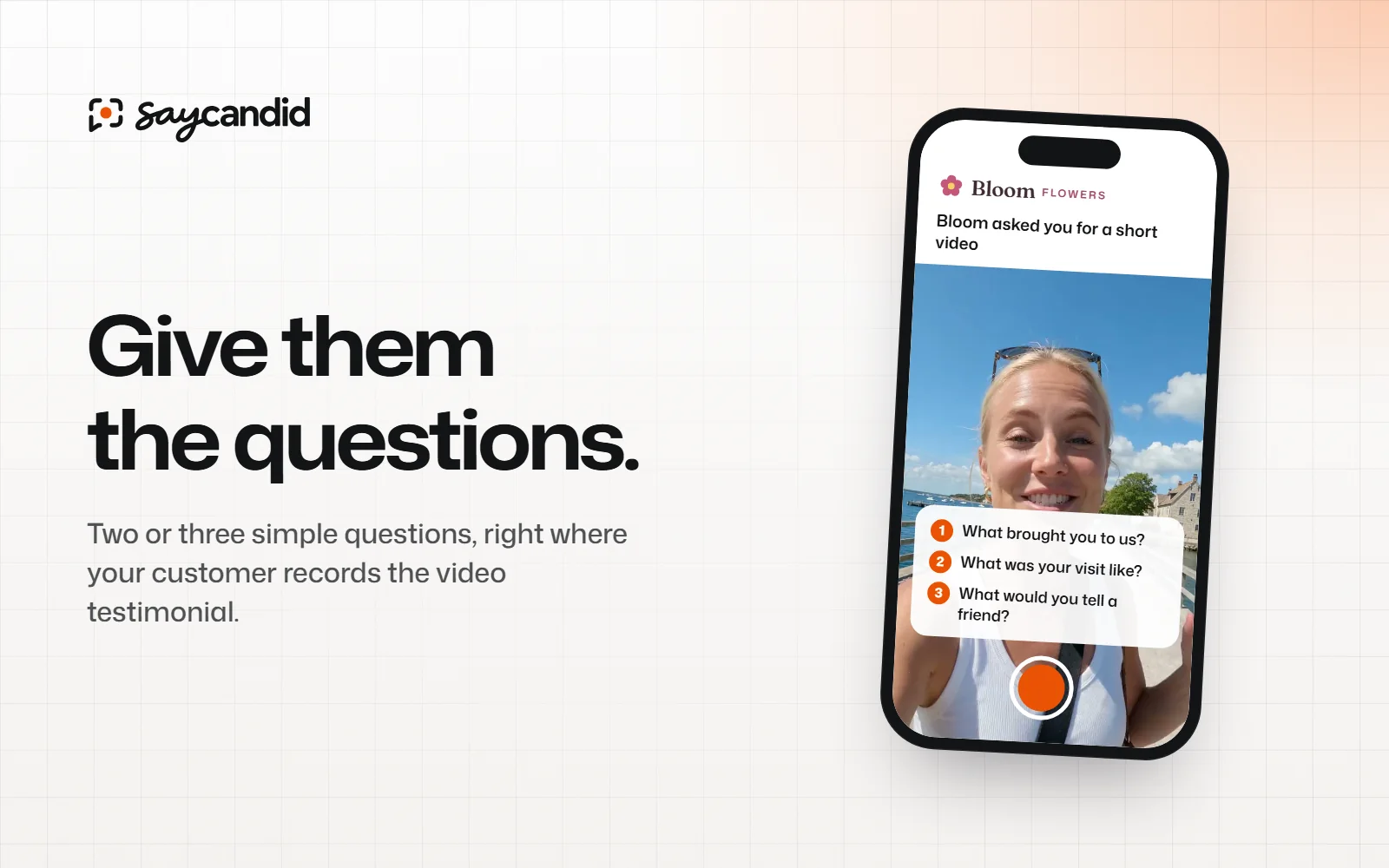
Video testimonial questions that get useful answers
Not sure what to ask for a video testimonial? Find simple questions that help customers talk about their experience in their own words.
Website conversions4 min read
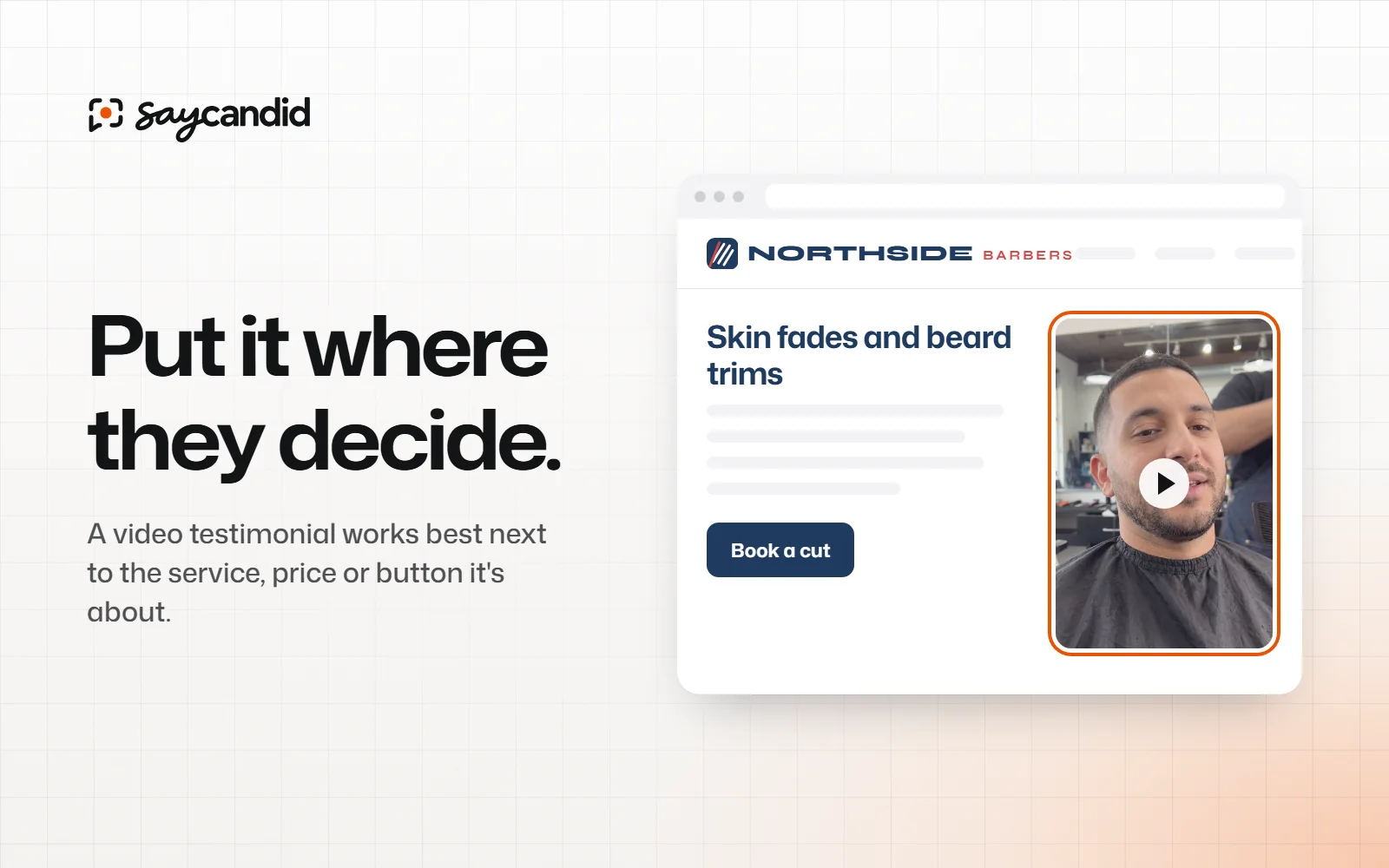
Where to put testimonials on your website
Not sure where to put customer testimonials? Here are the pages and places to try, from your homepage to your booking button.