AI UGC vs customer testimonials: which should you use?
Thinking about AI UGC? See how it compares with a real customer video, and when you might use each one.
The SayCandid team5 min read
Key takeaways
- An AI presenter can talk about your product. A real customer can tell people what it was like to use it.
- Think about what you need the video to do before you choose how to make it.
- Don't pass off a made-up customer story as a real one.
In this article
- 1What is AI UGC?
- 2What is a customer video testimonial?
- 3AI UGC and testimonials compared
- 4The same idea, two different videos
- 5The problem with a fake customer story
- 6Do people trust AI-generated ads?
- 7When a real customer video is useful
- 8You can still use AI to prepare the video
- 9Ask a customer instead of writing their story
AI UGC lets you make videos with an AI presenter. A customer testimonial is a video of someone who has actually bought from you or worked with you. Both can help you make content, but they give you different things to say.
Worried your AI ad looks fake? You're not alone. And sometimes it isn't the way the person looks or moves. It's what they're saying.
If an AI presenter talks like they've bought and loved your product, you're asking people to believe a story that never happened. A real customer can tell you what actually happened. And you can still use AI to help edit their video.
What is AI UGC?
AI UGC usually means AI-generated videos or images made to look like content from a creator. You might use an AI presenter to explain your product or make a few versions of an ad.
It's easy to see the appeal. You don't have to arrange a filming session every time you need a new video. But if the video looks like a review, that doesn't make the presenter a customer.
What is a customer video testimonial?
A customer testimonial comes from someone who has used your product or service. They might talk about why they booked, what it was like working with you, or how they use what they bought.
They can talk about the questions they had before buying and the details they remember afterwards. Your job is to give them a few good questions and share their answer honestly.
AI UGC and testimonials compared
| Question | AI-generated UGC-style content | Customer video testimonial |
|---|---|---|
| Who is speaking? | A generated or digitally produced presenter, depending on the tool | A person describing their own experience |
| What can it show? | An offer, concept or product presentation | What happened for the customer |
| What do you control? | The generated creative and production process | The request and edit, while the customer controls their own account |
| What needs attention? | How the presenter and any claims are represented | Permission, accurate editing, claims and any required disclosure |
| Where could it be used? | Advertising or other creative, subject to the platform's rules | Website, proposals or ads when the customer has agreed to the use |
You can use both. A product demo can show someone how the product works. A customer video can show them what it was like for someone who bought it.
The same idea, two different videos
Imagine you sell an online booking tool. You want an ad that introduces it to a busy salon owner. Here are two ways you could approach the idea. These are made-up examples, not real ads or customer testimonials.
Option 1: an AI presenter explains the tool
On screen: a clearly identified AI presenter shows the booking page.

Presenter: "Want customers to book an appointment online? Here's how [tool] works."

Next step: "See how it works."The presenter introduces the product. They aren't pretending to be a customer who has used it. Check the rules for the platform and place where the ad will run.
Option 2: a customer talks about using it
On screen: a real salon owner who has agreed to appear.

Ask them: "How do customers book with you now?" and "What was it like getting started?"

Use: an accurate part of their own answer, with their permission.

Next step: "See how it works."The second version gives a customer space to describe their experience. Don't write their answer for them or make up a result. If they've received a gift or have another connection that viewers should know about, check the FTC's disclosure guidance.
You could test both approaches. Compare the results you care about, while keeping the offer and audience in mind. The example doesn't tell you which ad will perform better.
The problem with a fake customer story
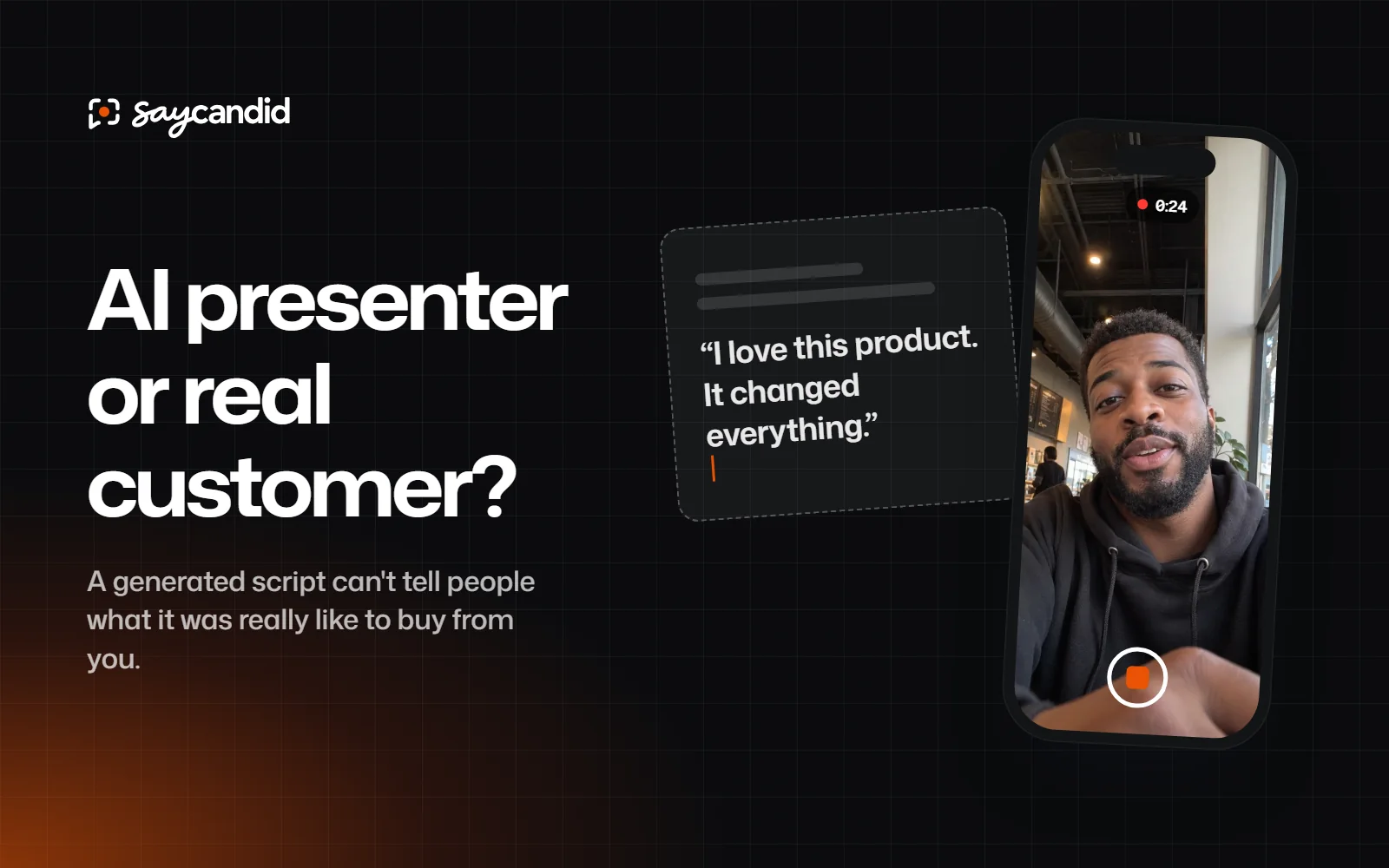
An AI presenter can say, "I love this product." But if they've never used it, that isn't a customer telling you about their experience.
If your ad makes people think they're hearing from a real customer, the story needs to be real. The FTC's guidance on reviews and testimonials explains how its US rule treats false testimonials and AI avatars. AI presenters aren't banned across the board; what matters is whether the ad misleads people.
Think about the difference between "Here's how this product works" and "I bought this and it changed my life." The second one asks people to believe the speaker has actually tried it.
Do people trust AI-generated ads?
Some people do worry about AI ads. In IAB's 2026 research, only 45% of the Gen Z and Millennial consumers surveyed felt positive about AI-generated ads. The researchers also found that ad executives expected consumers to feel more positive than they did.
That doesn't tell you how your own ad will perform. But it's a good reason to think about what you're asking people to believe when they watch it.
If you want to show what a customer experienced, ask a customer. Let them tell the story for you.
When a real customer video is useful
Think about the questions people ask before they buy:
- What was it like working with this agency?
- How did the appointment or service go?
- How does someone use this product in everyday life?
- What made a customer choose this business?
- What would that customer tell someone considering it?
Your customers can help answer those questions. Give them a few prompts and let them speak for themselves. Need ideas? Here are some video testimonial questions.
You can still use AI to prepare the video
You don't have to do everything by hand. You can use AI to help make captions for a real customer's video. The customer is still the one telling the story.
Read the captions before you share the video. Names and numbers are worth checking twice. And when you trim the clip, make sure it still means what your customer intended. If you're using it in an ad, check their permission and any disclosures you need.
With SayCandid, you can send a link and let the customer record on their phone. When the video arrives, you can watch it, trim it and add captions. Here's how to turn a customer video into an ad.
Ask a customer instead of writing their story
Think of a customer who knows your product or service. Send them a personal message with a few questions, and tell them where you'd like to use the video. They can watch it back before deciding whether to send it.
Create a video request and give your next customer a chance to tell their own story.
Questions people ask
- What is AI UGC?
- AI UGC usually means AI-generated content made to look like a video from a creator or customer. Businesses often use it in ads.
- What is the difference between AI UGC and a customer testimonial?
- AI UGC is a way to make content. A customer testimonial is a real person talking about their experience with a product, service or business.
- Can I use AI with a real customer testimonial?
- Yes. For example, you can use AI to make captions. Check them before sharing, and make sure the final video reflects what your customer said.
Keep reading
Website conversions6 min read
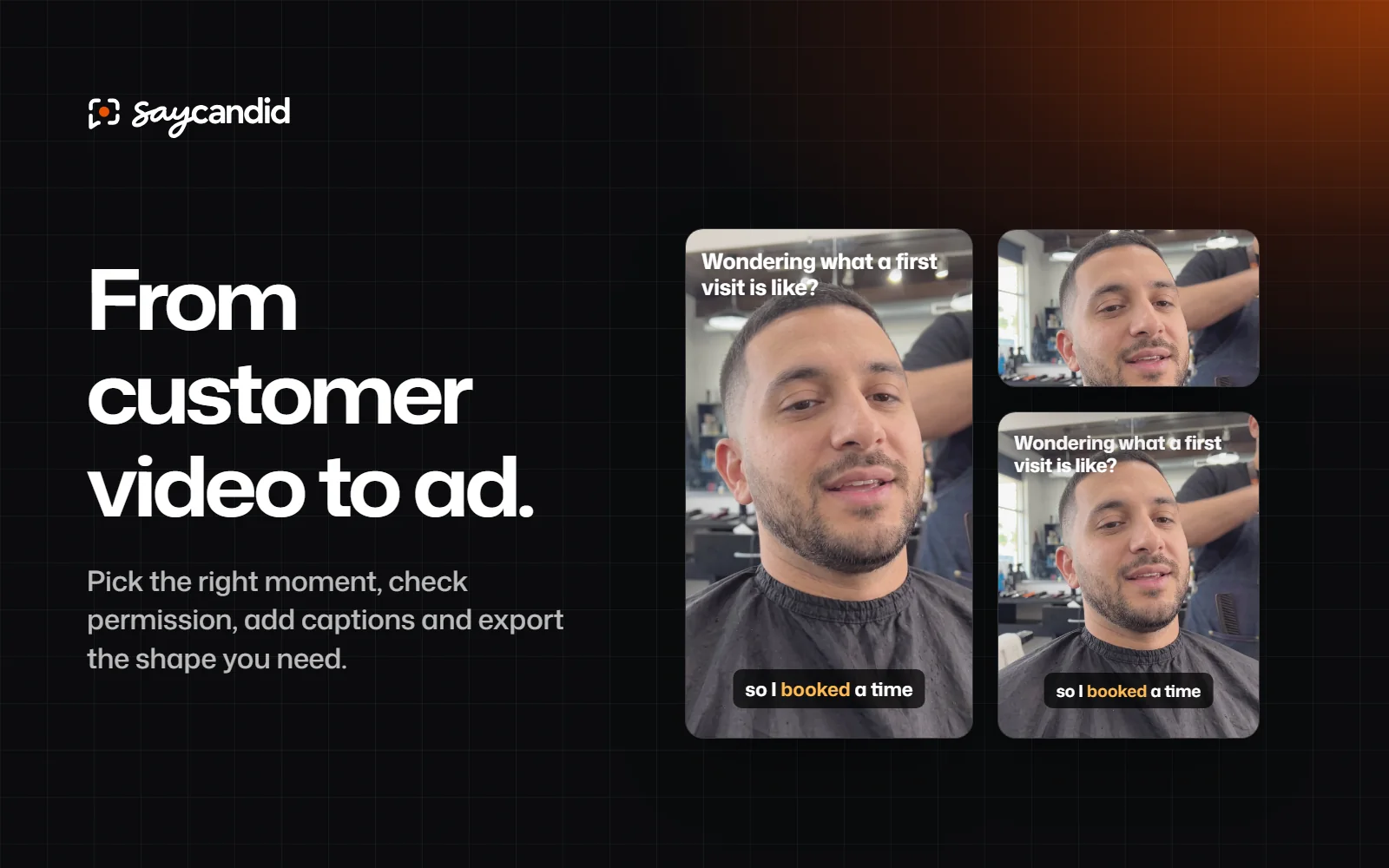
Testimonial ads: how to turn customer videos into ads
Have a customer video you'd like to use in an ad? Here's how to choose a clip, check permission, add captions and get it ready.
Customer testimonials5 min read
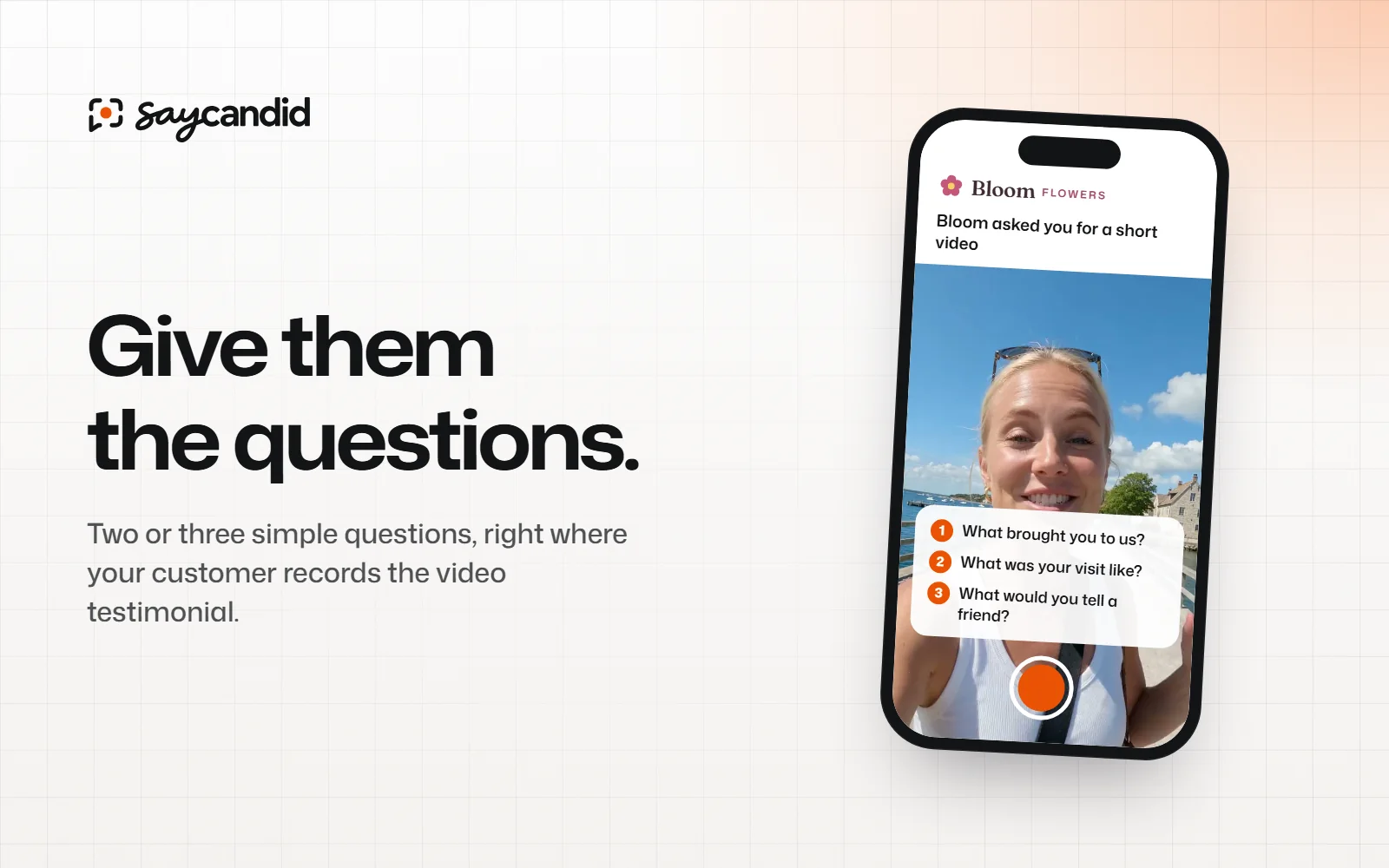
Video testimonial questions that get useful answers
Not sure what to ask for a video testimonial? Find simple questions that help customers talk about their experience in their own words.